Thursday, February 19, 2015

Week 5: La Llorona

José Guadalupe Posada, Calavera Catrina, ca. 1910-13

 CANCIÓN: LA LLORONA. Chavela Vargas y Antonio Bribiesca, versión classica de los años 1960:
https://berkeley.box.com/s/5cy83mcooa9lgoxebjxgp8vs6jhxqvxf 

This is the classic version, although hard to find now that Chavela's later version, in Frida, has become so popular. Both are meaningful, of course, but the combination of Chavela and Antonio Vargas i(listen carefully!) is truly remarkable. It doen't get better than this in terms of representing the tradition. For the lyrics to this early version--which I want you to concentrate on--see below.

Otras versiones de Chavela:
Chavela, versión mas recién (1990) tiempo de la pelicula, Frida:
▶ La llorona Letra-Chavela Vargas - YouTube-
Chavela Vargas - La Llorona (Video Clip) - YouTube
▶ La llorona Letra-Chavela Vargas - YouTube-  Video con letra, versión recién

Otras versiones:
▶ Lila Downs y Chavela Vargas La Llorona. - YouTube   Lila Downs y Chavela juntas. Den attención a la introducción de Lila Downs (a Chavela)
▶ Eugenia León le canta a Chavela Vargas "La Llorona". - YouTube
▶ DAVID ZAIZAR, LA LLORONA (1958) - YouTube

Film supplemento: Hasta los huecos (gracias a Fernanda!) QUEDA IMPORTANTE VERLA! 
BE TO WATCH SO THAT WE MAKE THIS FILM PART OF NEXT WEEK'S DISCUSSION:

Hasta los huesos / Down to the bone (Short Film) (HD) - YouTube

There was also a feature film made on the theme in 1933--somewhat dated at this point, but interesting for that very reason: La Llorona (FILM, 1933) Adriana  Lamar en papel de la Malinche.

LEER: * Don Octavio, Los Hijos de la Malinche. Paz makes reference to Llorona, although the story/myth is not central to what he write (interesting because of la malinche--la chingada). However, they are c onnected.

* Gloria Anzaldúa: Borderlands / La Frontera (pdf posted under Downloads Links). The theme of la malinche/la llorona runs all through her book. See in particular pps. 35-37.

* Optional, but I want to put it on your radar: Sandra Cisneros, Woman Hollering Creek (short story, 1991), a modern reworking of la llorona legend by the deservedly recognized San Antonio writer.

In various ways, the la llorona legend runs through all these books. However, you'll need to do your own online investigation of the theme!

LEYENDA/MITO.  Here are some related connections: Calavera Catrina (Día de los muertos), Aztec Gods (origin of the myth--Mictecacihuatl, Cihuateotl), river goddess--various cultures, José Luis Posada (grabaciones del período de la revolución) et al. Will show you some of this in class. Also--la forma musical de  la llorona es una mazurca--y la mazurca tiene paralelas in el baile folklórico de méxico (de tiempos de los franceses y antes...).

QUESTIONS:
El significado de la letra (de la canción)--versión classica de Chavela
En comparación a otras versiones--la versión más recie´n de Chavela, y otras?
Es canción de amor?  (versión de Chavela!)
Si les parece que las letras tengan variaciones porque llevan variaciones distintas de la leyenda?

PROYECTO: La Llorona--tu interpretación personal--de la música, y de la layenda...
_______


LETRA de la version original de Chavela (aproximada):

Todos me dicen el negro, Llorona
Negro pero cariñoso.
Todos me dicen el negro, Llorona
Negro pero carioso.

Yo soy como el chile verde, Llorona
Picante pero sabroso.
Yo soy como el chile verde, Llorona
Picante pero sabroso.

Hay de mi llorona,
llorona tu eres mi chunca
Hay de mi llorona,
llorona tu eres mi chunca              (chunca--shunca--palabra zapoteca--querida)

Me quitaran de quererte llorona
pero de olvidarte nunca...

Salias del templo un dia Llorona
cuando al pasar yo te vi
Salias del templo un dia Llorona
cuando al pasar yo te vi

Hermoso huipil llevabas Llorona
que la virgen te crei
Hermoso huipil llevabas Llorona
que la virgen te crei

Si porque te quiero quieres, Llorona
Quieres que te quiera mas
Si porque te quiero quieres, Llorona
Quieres que te quiera mas

Si ya te he dado la vida, Llorona
Que mas quieres?
Quieres mas?

Si porque te quiero quieres, Llorona
Quieres que te quiera mas
Si porque te quiero quieres, Llorona
Quieres que te quiera mas

Si ya te he dado la vida, Llorona
Qu mas quieres?
Quieres mas?

Friday, February 13, 2015

Week 4: Amor y...

Emilio "El Indio" Fernández, con María Teresa Orozco, en Janitzio, 1935


Hola clase-buen grupo anoche, trabajos interesantes, bien pesados, y una conversación animada. ¡Adelante!

PROYECTO: Lo unico en que tengo duda queda en las palabras que les di-- Amor y Traición. Si, por supuesto (como les dije) encontramos sentidos parecidos en las canciones--a veces exactos--pero al mismo tiempo las canciones tratan de todo tipo de amor--y todos los sentimientos. Y lo mas importante--es que no quiero dejarles con una pareja de sentidos que lleva tanto de lo malo. No quiero que van pensando/meditando una semana entera en eso. Así que ahorita voy a cambiar el tema: Hacemos AMOR Y... Les dejo la segunda palabra abierta...(!) Quiero que busquen bien en las letras en el cancionero (y escuchen bien a las canciones mismas!) para descubrir las tantas variedades de sentimiento que llevan en relación al tema de amor en si... Cada uno/a de ustedes tiene que seleccionar su propia segunda palabra!

Yes, as I drove home, I realized I did not want to have you meditating on Amor y Traición for a whole week. Even though that opposition comes up in many of the songs. But often (and even more interestingly) it's resolved in very different ways--the songs leave open just where things go wrong--and often the possibility--or at least la esperanza--that they will right themselves. And if the end lleve tristeza--o aun tragedia, it often comes with a realization that is in itself terribly uplifting (how's that for an opposition?). Se me olvidó otra vez--exemplo perfecto. As I thought about the evening (and even though several of you took on difficult--and fraught--themes (which is GOOD) I believe very strongly that YOU need to be the ones who decide whether a darker theme vale la pena (sentido literal). It's not right for me (at the end of a long evening, as I told you, an evening with lots of change-ups, including the late start) to impose this. Okay? Ya les dije!

And discussing this should go on being a part of our evenings together..
.
READING. Continue with don Octavio: Todos Santos / Día de Muertos. By the way, this opposition is probably what influenced me in the theme I gave you--and thinking about how it resolves also led me to change it. Art allows us to express these things (and following don Octavio, so does el tiempo de fiesta...) without necessarily having to relive them... The absolute truths (yes) but also the fact that we can change--influence--so much of what happens along the way!

DETAILS. I read your notebook posts with interest. Keep it up! With a large group, the writing allows you to speak--to have a place--even when personal time with the group can run short. On the other hand, I like that all of you are there, and your buen espíritu. Also--help me out more at the beginning. Be in 170 by 6:10,  get your work up with comment sheets, clear away the unnecessary chairs--and look to helping me with screen set-up, table lamp and all. If we get going with a good start, the class will run more smoothly--and I'll fit in all the things we need to!
_________

TEMA DEL AMOR: Aquí estan las del cancionero que especialment tienen que ver: (en hacer esta lista, me doy cuenta que casi todas las canciones tienen su relacion al tema--pero consideramos estas en particular). Ya cantamos unas--vamos a cantar de las demás, así que las van apriendo... Y quiero que las citen en nuestras conversaciones!

El último trago (José Alfredo Jiménez,  canta Chavela Vargas)
Arrieros somos (Cuco Sánchez, canta Chavela Vargas)
Albur de amor (Alfonso Esparza Oteo, c. Chavela Vargas)
Cartas marcadas (Chucho Monge, c. Chavela Vargas)
Cruz de olvido (Juan Zaízar, c. Chavela Vargas)
Ella (José Alfredo, c. Chavela Vargas)
Farolito (Agustin Lara)
Sin tí (Chucho Navarro, c. Trío Los Panchos)
Perdida (Chucho Navarro, c. Trío Los Panchos)
Ojos tristes (Guty Cárdenas)
Nunca (Guty Cárdenas)
Ojalá que te vaya bonito (José Alfredo, c. Chavela Vargas)
Volver, volver (F. Maldonado, c. Chavela Vargas)
Cucurrucucu paloma (Tomás Méndez Sosa)
Cama de piedra (Cuco Sánchez)
Fallaste corazón (Cuco Sánchez)
La borrachita (Tata Nacho)
Adiós mi chaparrita (Tata Nacho)
El desterrado (arr. Manuel Ponce)
Se me olvidó otra vez (Juan Gabriel, c. Chavela Vargas)
Tu recuerdo y yo (José Alfredo Jimenez, c. Chavela Vargas)
Paloma Negra (Tomás Méndez Sosa)
Cuando vivas conmigo (José Alfredo Jiméne)
Corazón, corazón )José Alfredo Jiménez)

Si tu te vas (Cuco Sánchez)  (les voy a dar la letra; Cuco Sánchez la canta)

Thursday, February 12, 2015

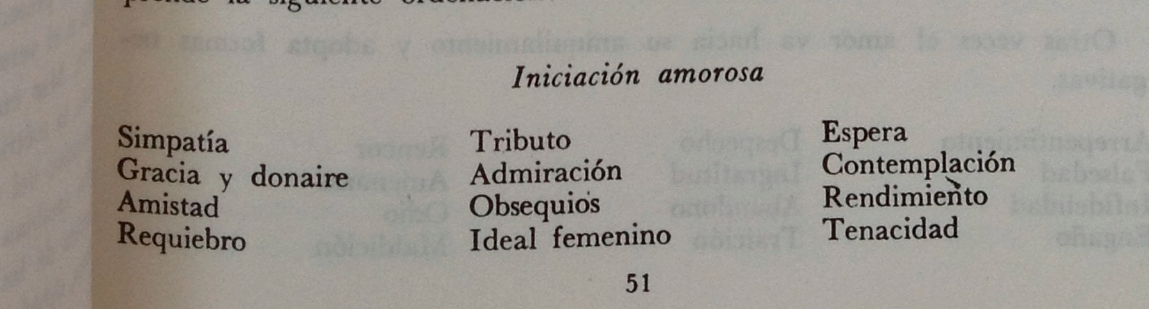
Suplemento: Vicente T. Mendoza


Scanned from Vicente T. Mendoza, La Canción Mexicana: Ensayo de clasificación y antología., pps. 51-53. (See course bibliography.) Mendoza picks out these variations from the hundreds of songs collected within. Worth contemplating. I don't know if there's any tradition as varied in this regard. México lindo y querido! See Mendoza's own note, at the end of the list above.

Should add to how you listen to the songs--and how you comprehend the lyrics!

Thursday, February 5, 2015

Week III: Máscaras

 
Graciela Iturbide


Leer: Octavio Paz, El laberinto de la soledad, capitulo 2: Máscaras mexicanas.
I could see from the good--and engaged--conversación last night that you can get into Don Octavio (even when you disagree!)  I want you to read carefully, and make notes on points you want to cite. Your comments need to be grounded in the text--and your questions/comments can also figure on your blog.We'll use México Profundo as a balance--soon!

Reread the section in first chapter on "norteamericanos" y mexicanos. Make your oppositions chart. You need to know what he says--and think about how it fits with ALL of our experiences...

Projecto: Máscaras. Las primeras dos semanas, me parece, han servido como celebracíon de familia, de lugar, del pasado. Corazón y recuerdo. This week I want us to broaden the scope--that is, to consider a wider range of feelings. Reading don Octavio, you'll see he talks about this using the word "máscaras"--both literally, and in an insightful figurative sense. It's this relationship I want you to explore in your visual projects. Pueden además citar versos encontardos en las canciones en que vemos esto mismo? O ejemplos de tu propia vida? A publicar los en los caudernos...
Máscaras: Lo psicológico... The psychological complexity here is what's important. Hay caras múltiples a una máscara... Mascarea y rostro... Caras y Méascaras. (La cara figura en la máscara...)

Cuadernos:  Qué se den cuenta: Publicar fotos de tus obras cada semana. I usually take a look at the blogs on Thursday mid-day--so keep them up to date. You can discover whether posting your project in advance of class works--or after. Both are okay--but I expect you to make a post each week. Include your writing, too--plus your questions from a close reading of don Octavio... which will also figure in our conversations...

Canciones.  A veces una canción en particular presente el tema de que se trata. Quizás por esta semana sea Paloma negra... de Tomás Méndez Sosa. Aquí tienen tres versiones:

TOMÁS MÉNDEZ canta "PALOMA NEGRA" - YouTube 
(el compositor)
LOLA BELTRAN: PALOMA NEGRA - YouTube
Chavela Vargas-Paloma negra - YouTube
y Lila Downs, mas recién:
▶ Lila Downs canta Paloma negra - YouTube 

y Lola Beltran Sufriendo a solas:
Lola Beltran en Bellas Artes -SUFRIENDO A SOLAS-, 1990..VOB - YouTube

Keep listening to the cancionero! Cantamos mas en la próxima!

Week II: Notas

This is a summary of what I sent you by email last Sunday in preparation for this week's class:

READING, Capítulo primero en Don Octavio. El Pachuco y otros extremos.
*   3 preguntas buenas--incisiva--para discutir en clase.
*   Que significado tiene lo que escribe en el primer capítulo en relación a tu vida propia?

CUADERNO ELECTRONICO: a publicar estas dos cosas, antes de la clase que viene:
*  descripción personal (ya hay algunas muy lindas!)
*  Tierra y Corazón--Week I--primer projecto (foto y algo bien escrito)
Send me URL as active LINK to your home page (la mayoria lo han hecho--faltan miguel, angele y jen)

CANCIONES (downloads). Escuchar, cantar, aprender!

CANCIONERO. Hay que traer tu propia carpeta con la letra a cada clase! No se olviden!

Monday, February 2, 2015

Cuadernos electrónicos


Luna Izpisúa-Rodríguez     http://mexicolunaizp.blogspot.com
Reem Makkawi                  lasestrellasviejas.wordpress.com
Lidia Gómez                        http://lagomez07.blogspot.com/
Seamus Rucci Land            http://songsandseamus.blogspot.com/
Fernanda Sánchez               elreflejodelamirada.blogspot.com
Felipe Javier Díaz                http://felipexavierdiaz.blogspot.com/
Adrián Mata Rendón           http://rendonvisualstudies185x.blogspot.com/?m=1
Diana Carolina González     http://dudasinfin.blogspot.com
Verónica Jiménez                 http://verojg.blogspot.com/
Joakina Moreno                   http://joakinamoreno.blogspot.com/
Jennifer Vargas                     http://jenni-fair.blogspot.com/
Kitty Jones                            http://composty.blogspot.com/
Dulce  López                        http://candydexocolate.blogspot.com/
Aby Nieves                           http://abysnow.blogspot.com
Miguel Naranjo                     http://estrellaspalmas.blogspot.com/
Angele Hodali  Carrión        http://dealpacayolivo.blogspot.com/
Jorge Villanueva                   http://jvillanuevagon.blogspot.com/

Wednesday, January 28, 2015

Week II: Casa y Recuerdo


Manuel Álvarez Bravo


Week II: Casa y Recuerdo

Muy bonita la clase de ayer...un grupo con animo. Les agradezco. If we stay this large, everyone has to stay with it and keep the energy--pero eso no me parece problema!


Reading: This week we'll start Octavio Paz-- His first chaper, El pachuco y otros extremos. You can read in Spanish or in English. Write down three good questions--and maybe the beginnings of an answer--based on the reading. Think about them--bring them--for discussion in class next week. And post on your blog. (Label each week's post as I do so that we can follow and stay together--ie, Casa y Recuerdo--although what you post will be entirely your own.) I'll want you to come up with these questions from the reading each week--para la conversación que vamos a mantener... Also, bring your Don Octavio to class.

Para ellos que sean músicos--que lean bien (toma dos semanas) Yolanda Moreno Rivas, capítulo primero (La música en tiempos de don Porfirio), especialmente "el mestizaje sonoro." Use youtube para hacer investigaciones de las fuentes de la música (muchas veces se puede colocar a las canciones que menciona YMR en YouTube). Her first chapter will clarify many things about the origins of la musica popular mexicana a los inicios del siglo XIX...

For those with other interests, have a second book on your radar. (I want all of you to concentrate first on Octavio Paz.) Bonfil Batalla's México Profundo would be very good, for an understanding Mexico's indigenous cultures.  And Gloria Anzaldúa or Gregory Rodríguez for views on the Mexican-American experience... (Or Richard Rodriguez for an articulate and one-of-a-kind point of view...). We'll discuss these choices in class. See bibliography. Gloria Anzaldúa has been very meaningful for many kids who've done this class...especialmente para las mujeres...

And take a look at the Steve Lopez LA Times article I posted as a supplement in Week I (Don Heriberto). It's short, and an insightful description of a real experience--tiene mucho que ver con la clase...

Project:  Casa y recuerdo.  If Tierra y corazon took us to a landscape, this week we enter inside... In all senses... I'll show you some videos that apply, when we gather next week. (We ran out of time last night.) Ensimismarse es la palabra que usaba el poeta chileno Pablo Neruda...

Música. Make sure you listening to Chavela, and consider the lyrics (this is a gradual process!). And of course, el cancionero, which includes other songs, too. I'll give out more in class as we go along ... Listening to the cancionero download is important--that's how you need to absorb the songs...ensimismarse... La letra es cosa esencial. Hay que pensar en cada canción así--que nos dice? literalmente? y en términos metafóricos? El poema Madrugada de Lorca--los saltos de la imagínacion...

And be sure to bring your song folder to class eaxch week...

Cuadernos electrónicos. (OK, blogs.) Post your work (photo image of your project) with short written piece each week. I suggested 100 words or so. I don't want to burden you with too much writing--and the point here is to find evocative ways of using words--written language--in parallel with the visal. Los dos andan juntos... Also see my comment above, under Reading--three questions from don Octavio--and the beginnings of an answer... If you have questions about how to photograph, ask in class next week.

Auto-retrato. After last night's discussions, and the new folks--I think it would be good if your first post is a self-description--an edited version of what you sent me to join the course...

For the WRITERS in the group.  You'll need post your work, project by project, labelled accordingly, on your blog. We'll discuss in class how to alert everyone else in the group. You'll need to do this by Wednesday noon so that the class has time to read your post for the following evening, with comments and questions.When I have full email list, I will share with you.
It's also fine if everyone takes a shot at doing visual work each week. But let's see how this develops...
_____

And from last night's  class--unas canciones bonitas! Cantamos más...! 

Friday, January 23, 2015

Suplemento: Madrugada / García Lorca


Federico García Lorca


Madrugada

Pero como el amor
los saeteros
están ciegos.

Sobre la noche verde,
las saetas,
dejan rastros de lirio
caliente.

La quilla de la luna
rompe nubes moradas
y las aljabas
se llenan de rocío.

¡Ay, pero como el amor
los saeteros
están ciegos!


Early Morning

But like love,
the archers              
are blind

Over the green night,
the arrows                             ("the piercing saetas" would be more accurate--includes saeta as song)
leave tracks of warm
lilies.

The keel of the moon
breaks purple clouds
and the quivers
fill with dew.

Ay, but like love
the archers
are blind!

(translation W.S. Merwin)

Note: Saetas--arrows, but also the songs from Semana Santa in Sevilla. "Copla breve y sentenciosa que para excitar a la devoción o a la penitencia se canta en las iglesias o en las calles durante ciertas solemnidades religiosas." Diccionario Real Academia.

Suplemento: Don Heriberto


Les mostré este artículo de Steve Lopez--aquí tienen el link: 

An oasis of music and wine in Baja - latimes.com

Week I: Tierra y Corazón


Manuel Álvarez Bravo

Week I: Tierra y Corazón


Our first project. Make (draw/paint/assemble/construct) something which expresses the meaning of these words to you--in your life, in memory, and in what you know of your family past. There will many points of view in the class--that's a good thing--and it will be a subject of our continued conversation when we look at the work next week (pinned up on the walls in 170). Reem asked if you're to "illustrate" this.  I'd say instead, give life to the theme--in visual terms.

I encourage you to emphasize the hand--that is, the feeling of making by hand--as a route to the personal.

Size, meda, approach--all open.

For those of you with less hands-on studio art experience--start with meaningful photos in juxtaposition (siize, posisition, relative lights and darks). As "information"--but also as something to be looked at.

For those with more drawing and painting experience--dive in.

_____

Practical notes:

Cuaderno Electrónico.  Set up your "cuaderno eléctrico" (blogsite) using blogger.com--and send me an active link to the homepage. I want you to do this before I give you a cec. We'll discuss posting in class...

Reading/Book Purchase: For this week, make sure to purchase  Octavio Paz (El laberinto de la soledad)--at local bookstore or online.  Inmediatamente! (I've posted the original Spanish version on BOX, pero queda más cómodo leerlo en forma de libro... See bibliography.)

I highly recommend that you also purchase Frances Toor, A Treasury of Mexican Folkways.
Other readings available in PDF. See Bibliography.

Música. Download these two:
Chavela Vargas: Sentimiento de México (Vols. I-II).
Cancionero Méxicano, which includes recordings of most of the songs in printed Cancionero handout.
Concentrate on all the new songs in the downloads. Empezar escuchando, cantando, aprendiendolas...!

Cancionero. Keep your song sheets in a folder, and bring them to each class. There will be supplements, so you'll need a folder. (I had a pile, but forgot to hand them out. Will do next week.)

Writing. Something I'll want you to do in working on your project for each week is to write a notebook entry in parallel. Not too long--and later we may pin these up along with your work "de introducción..."--as a kind of written introduction. No, I don't know just what I have in mind--so, you'll show me--and show each other--what this means! We pin up the projects at the beginning of the evening--and these can be alongside (or below)... can be trimmed to smaller than 8-1/2 x 11 if you like... Later posted on your cuadernos electronicos as well.

Course Material. I've posted needed material on my blog, for your reference. Read through it carefully. The posts will help you understand where we're going in the course. (There may be minor typos relative to previous versions of the class--so bring questions. En todo caso, bring questions!

http://anthonydubovsky35.blogspot.com/

Thursday, January 22, 2015

S&P: México / Download Links


Música:

Note: When downloading music folders, for full information on each track be sure to include the xml file for playlist and track data when you drag music files into iTunes or equivalent. 

Chavela Vargas, Sentimiento de México (Vols. I-II)
https://berkeley.box.com/s/ibzbwcc0d401qwwrqrm3

Cancionero Méxicano (grabaciones)
https://berkeley.box.com/s/asi7kovmtbcb0e97kq0c

Additional downloads:
Chavela Vargas y Antonio Bribiesca, Grandes Exitos  (La llorona y otras)
https://berkeley.box.com/s/yih634mursb29x4oma40hq1uysx1lsxg


Reading:

Octavio Paz: El laberinto de la soledad
https://berkeley.box.com/s/vbul0clyk0zpshows0eb 

Guillermo Bonfil Batalla: México pofundo: una civilización negada 

https://zoonpolitikonmx.files.wordpress.com/2012/07/mexico-profundo-guillermo-bonfil-batalla.pdf (Español)

https://freeuniverseity.files.wordpress.com/2014/03/batalla-1996-mexico-profundo.pdf  (English)


Yolanda Moreno Rivas: Historia de la música popular mexicana
https://berkeley.box.com/s/8wyr5432n3937449lkuw

(For YMR you'll need to download the file (pdf) onto your computer in order to use the text search function    (a real plus, since the book has no index)

Supplemental:

Gloria Anzaldua, Borderlands/La Frontera: The New Mestiza
Anzaldúa - Borderlands La frontera.pdf

S&P México / Cancionero

http://anthonydubovsky22.blogspot.com/2013/05/s-mexico-camcionero-letra.html 
_____

con titulos adicionales:


Canciones Mexicanas I
https://berkeley.box.com/s/1cjalaxdi3xkclixayd9 

Canciones Mexicanas II
https://berkeley.box.com/s/s0faepeo8fh3qj4r0t9c 

_______________

For all my other S&P Songbooks (American Roots and International)  here's the link. Included are a supplements to the México cancionero as well:

http://anthonydubovsky33.blogspot.com/

S&P: México / Canciones--Lista amplia

CANCIONES MEXICANAS (rev Jan 2013 draft). This is a  working list compiled before the start of the semester. It became the basis for our Cancionero (separate entry)--the songs learned together over the course of the term.  During Spring 2014 I'm hoping to ammend and update--it's of course just a start...


El último trago  (José Alfredo, c. Chavela Vargas)  C/2
Arrieros somos  (Cuco Sánchez) E/3
Albur de amor  (Alfonso Esparza Oteo, c. Chavela Vargas)  E/2
Cartas marcadas  (Chucho Monge, c. Chavela Vargas)   E/2
Cruz de olvido  (Juan Zaízar, c. Chavela Vargas)  C/2
Ella  (José Alfredo, c. Chavela Vargas)  G/3 o G/4

Farolito  (Agustin Lara)  G/2

Sin tí  (Chucho Navarro, c. Trío Los Panchos)  C/2
Perdida  (Chucho Navarro, c. Trío Los Panchos)   C/1

Ojos tristes  (Guty Cárdenas)  E/m / 2
Nunca  (Guty Cárdenas)  Am

Ojalá que te vaya bonito  (José Alfredo, c. Chavela Vargas) E/1
Volver, volver  (F. Maldonado, c. Chavela Vargas) E/1
Cucurrucucú paloma  (Tomás Méndez/ Hupango canción) C

El venadito  (tradicionál) C
La feria de las flores  (Chucho Monge, c. Gloria y Ricardo)
Juan Charrasqueado  (V. Corder, c. Chavela Vargas)  C/2

Cama de piedra  (Cuco Sánchez)
Fallaste corazón  (Cuco Sánchez)
La borrachita  (Tata Nacho) A/1
Adiós mi chaparrita (Tata Nacho) C/2?
De los cuatro muleros (España/García Lorca)

Film:Fui queriendo nomás (Jorge Negrete/Antonio Bribiesca film)
Amorcito corazón (Jorge Negrete, Nosotros los pobres 1949)
La tequilera (v. Lucha Reyes, film)
Los Tres Huastecos (Pedro Infante, cura tocando violín)
La barca de Guaymas (Pedro Infante, tren)
Jorge Negrete y José Alfredo (El hijo del pueblo)
Pedro Infante y Piporro, Cartas a Eufemia
Tizoc (Pedro Infante)
Fallaste corazon (Pedro Infante, y version de Cuco Sánchez)
Jorge Negrete, México lindo y querido
Ernesto Cortázar / Miguel Esperón)
Ansiedad (Pedro Infante y Libertad Lamarque)
Los Pancho-Perdida, Sin tí
Cantinflas, El señor doctor, Bailando Yolanda

Chavela Vargas videos, Lola Beltrán videos
Sufriendo a solas (v. Lola Beltran, video)
Jorge Negrete, Lucha Reyes, Pedro Infante, María Félix
Andy Russell, Enamorado (odd song footage)

Canciones clásicas:
Marchita el alma (Zuñiga)
La golondrina  (Serradel)
Perjura (Lerdo de Tejeda)
Canción de despedida, etc.
La paloma (habanera 1era)

Miguel M. Ponce:
Estrellita
Rayando el sol (arr.)
A la orilla de un palmar
Mañanitas mexicanas
Cielito lindo (arr.)
La pajarera
La Valentina
La borrachita, Ignacio Fernández Esperón (Tata Nacho)
Adiós mi chaparrita (Tata Nacho)
Canción Mixteca (López Álvarez)
Adiós mi mariquita linda (Marcos A. Jiménez)
Mi viejo amor (Alfonso Esparza Oteo)
La barca de guaymas  (arr. Rubén Fuentes)
Indita mía (David Zaízar)
El desterrado (canta Davíd Zaizar
El preso de San Juan de Ulua (cantan Hermanos Zaízar)

Corridos (very incomplete):
La Adelita
La Valentina
El mosquito americano
La tragedia de Belén
El Venadito
La tumba de Villa
Carabina 30-30
Los dos hermanos (c. Chavela Vargas)
Sábado en D.F. (Chava Flores), Voy en el metro (Chava Flores)

Trovas Yucatecas:Peregrina (Ricardo Palmerín / Luís Rosada Vega)
Flor (Guty Cárdenas)
Beso asesino (Pepe Domínguez)

Nunca (Guty Cárdenas)
Ojos Tristes  (Guty Cárdenas)
Chilenas (Guerrero):El camino a Chilpancingo (Agustín Ramírez, c. Dueto Caleta) chilenas, gustos, sones
La Sandunga (Oaxaca/Istmeña, c. Chavela Vargas)

José Alfredo Jiménez:Amanecí en tus brazos (José Alfredo)
El rey
Ella
La media vuelta

Cuando vivas conmigo
Que te vaya bonito
Te solté la rienda
Tu recuerdo y yo
Cuatro caminos
El jinete
Porqué volviste (?)

Vámonos
Yo

Cuco Sánchez
Cama de piedra (arr.)
Fallaste corazón
Arrieros somos 

Anillo de compromiso

Agustín Lara:Farolito
Imposible
Mujer
María bonita
Piensa en mí
Trios: Los Panchos y otros (boleros) videos
Sin tí
Perdida

Piel canela, Sabor a mí, Frenesí, otros boleros
Angelitos negros (canta Chavela Vargas)
Las “Hermanas”
Las Hermanas Águila
Las Hermanas Huerta (Atotonilco)
Las Hermanas Padilla
Las Jilguerillas

Música regional:
Huapangos (Son Huasteca)
Son jarocho
Jarabes (sones jalisciences))
Jaranas (Yucatan)
Michoacan Orquestras típicas, sones, valonas jarabes
Oaxaca (Cancioneros típicos)
Mariachi, Norteño


Rancheras (in progress--only a start)
¡Ay, Jalisco no te rajes! (Esperón/Cortazar) film--Jorge Negrete
México lindo y querido  (Chucho Monge) film—Jorge Negrete
La tequilera (canta Lucha Reyes)
Besando la cruz (Chucho Monge)
Cartas marcadas  (Chucho Monge)
La feria de las flores  (Chucho Monge)
Pa’ que me sirve la vida?  (Chucho Monge)
El preso de San Juan de Ulua (canta David Zaízar)
Cucurrucucu paloma (Tomás Mendez), huapango canción
La cama de piedra  (Cuco Sánchez)
Fallaste corazón  (Cuco Sánchez)
Arrieros somos  (Cuco Sánchez)
Si no te vas  (Cuco Sánchez)
Echame a mí la culpa  (José Ángel Espinosa, Ferrusquilla), bolero ranchero
Sufriendo a solas  (José Ángel Espinosa, Ferrusquilla)
Cruz de olvido  (Juan Zaízar)
Paloma negra  (Tomás Méndez)

Se me olvidó otra vez   (Juan Gabriel)
Las rancheras de José Alfredo Jiménez
Juan Charrasqueado  (Víctor Cordero), corrido
Carabina 30-30  (canta Miguel Aceves Mejía), corrido
Los dos hermanos  (Juan Mendoza García, El Tariácuri), corrido
Paloma Negra (Tomás Méndez)


Viente años  (Los Aelgres de Terán)

S&P: México / Bibliography

VS 185X S&P: México / Bibliography / Books on Music and Related Topics


* Octavio Paz, El laberinto de la soledad (con vuelta a El laberinto de la soldead). México, D.F.: FCE 2000    (PURCHASE ONLINE)

Octavio Paz. The Labyrinth of Solitude and Other Writings. trans. Lysander Kemp. New York: Grove Press, 1961  (Good English translation; purchase this if you're reading in English)

* Guillermo Bonfil Batalla, México Profundo: Reclaiming a Civilization (trans.  Phillip A. Dennis).  Austin: University of Texas (PURCHASE ONLINE, available in English and/or Spanish editions, also available as PDF)

* Frances Toor, A Treasury of Mexican Folkways. New York: Bonanza Books 1985 (orig. 1947) (Purchase recommended, no PDF available)


READ AS ASSIGNED, available as PDF:

* Rivas, Yolanda Moreno. Historia de la música popular mexicana. México, D.F.: Oceano 2008 (orig. 1979)  On Berkeley BOX as PDF. (Note: To use the search function you'll need to download the pdf. The search is quite useful, as there's no index, so download.)

_______

As discussed in class:

Malcolm Lowry, Under the Volcano

Gloria Anzaldúa, Borderlands/ La Frontera: The New Mestiza, San Francisco, Aunt Lute Books, 1987
Gregory Rodriguez, Mongrels, Bastards, Ophans, and Vagabonds,2008.
Rodriguez, Richard, Brown: The Last Discovery of America. New York: Viking 2002.
J.M.G. Le Clezio, The Mexican Dream: Or, The Interrupted Thought of Amerindian Civilizations, 1993 (original in French)

Peter Everwine. Collecting the Animals (see the Aztec poems, his versions, within)
Ry Cooder. Los Angeles Stories.  SF: City Lights, 2011  (see "La vida es un sueño" and some of the other stories), 2008
Carlos Fuentes, Aura, 1962 (short novel, set in older part of Mexico City)

Bolaños, Marina Alonso. La "invencion" de la música indígena de México, Buenos Aires, 2008
(see Erik Hobsbawm, The Invention of Tradition, 1983). (Excellent bibliography)

Richard Rodriguez:Hunger of Memory: The Education of Richard Rodriguez (1982)
Days of Obligation: An Argument With My Mexican Father (1992)
Brown: The Last Discovery of America (2003)
(Richard Rodriguez--always a tonic point point of view--eloquent, acerbic, and often quite funny)

Gary Paul Nabhan, Singing the Turtles to the Sea: The Comcáac Art and Science of Reptiles. Berkeley: UC Press, 2003. A unique study of the Seri (Comcáac) people of costal Sonora, their myths, their art and their ecology. This remains a marvelous book.

Mendoza, Vicente T. La Canción Mexicana: Ensayo de clasificación y antología. México, D.F.: FCE 2005 (orig. 1961)
Garrido, Juan S. Historia de la música popular en México. México, D.F.: Contemperaneos 1981
Saldívar, Gabriel. Historia de la música en México (épocas precortesiana y colonial), 1934

Loza, Steven. Barrio Rhythms: Mexican American Music in Los Angeles. Urbana, Illinois: Univ. of Illinois Press 1993
Normark, Don. Chavez Ravine, 1949: A Los Angeles Story.  SF: Chronicle Books 1999. Normark's beautiful photographs.
Cull, Nicholas and Davíd Carrasco, ed. Alambrista and the U.S.-Mexico Border. Albuquerque: UNM, 2004
Chew-Sánchez, Martha.  Corridos in Migrant Memory.  Albuquerque, NM: UNM 2006
Burr, Ramiro. Tejano and Regional Mexican Music. New York: Billboard Books, 1999
______

Serrano, Álvaro Ochoa, ed. De occidente es el mariache y de méxico. Guadalajara: Colegio de Michoacán 2001
Calleja, Julian. Los mejores corridos mexicanos. México D.F.: El Libro Español 1972
Quintanilla, José Ernesto Infante. Pedro Infante: El Ídolo inmortal. México, D.F.: Oceano, 2006 (questionable)

Good General References on Mexican music:

Bibliography in Yolanda Moreno Rivas: an excellent condensed bibliography; refer to it for additional sources
Juan S.Garrido, Historia de la música popular en México
Vicente T. Mendoza (numerous publications on la música mexicana, including the corrido)
Gerónimo Baqueiro Foster (see his ethnomusicological studies)
Daniel Castaneda

S&P: México / Themes

TEMAS.

Note: These themes reflect last year's version of the course. I'll update as we proceed this semester. For now they'll give you an idea of the kinds of themes we cover.

Chavela y Antonio / cancionero mexicano

El último trago, Ojalá que te vaya bonito
Fui queriendo no más (FILM)

La canción méxicana clásica
Marchita el alma, Rayando el sol, La borrachita, Adiós mi chaparrita,
La barca de Guaymas

La trova yucateca: Guty Cárdenas (La canción romántica I)
Ojos Negros
Nunca (El dueto peninsular)

Agustín Lara  (La canción romántica II)
Farolito
Imposible

El Trío Los Panchos: Boleros   (La canción romántica II)
Sin Tí
Peridida
Ry Cooder story: La Vida Es Un Sueño (in Los Angeles Stories)

Cine mexicana
Jorge Negrete, Pedro Infante, Cantinflas,
María Félix, Libertad Lamarque (!)
México lindo y querido (Jorge Negrete)

Rancheras: Los inmortales y las bravías
La feria de las flores, Cuatro milpas, El preso de San Juan de Ulua
Pedro Infante, David Zaízar
Lola Beltran, Lucha Villa

José Alfredo: El hijo del pueblo
Ojalá qué te vaya bonito, Ella

Chavela Vargas
Volver, volver
Angelitos negros, Un segundo amor Las simples cosas

Cuco Sánchez 
La cama de piedra, Fallaste corazón

Las hermanas (Águila, Huerta, Padilla y Las jilguerillas)
Atotonilco, Trés balas, Cuatro milpas, Engañosa y cobarde

La música regional: la zandunga, chilenas, hupangos,  jarabes, mariachi, norteño
El venadito
Cucurucucú Paloma (hupango canción)
La sandunga, y sones de provincia (autores anónimos)

Son jarocho, Son huasteco

El corrido y la crónica popular
La Adelita
Juan Charrasqueado
La tumba de Villa

_______

El norte / East Los Angeles
Lalo Guerreo
Don Tosti
Thee Midnighters
Los Lobos
Newmark photos /  Chavez Ravine 1949
Ry Cooder album, also, some his Los Angeles Stories

S&P: México: Outline

 
VS 185X: SONGS & PLACES: MÉXICO / SP 2015 / 4 units / Thursdays 6-10pm / Anthony Dubovsky

Un modelo de corazón
Una manera de querer
Cosas de múy adentro
________

Some guidelines--
Carpeta / Folder with cancionero / song sheets--bring to every class; there will be in-class handout supplements
Attendance is required (only medical exceptions, or with 3 week notice)
Participation is important
I send you an email each week and post on this blog: read carefully
50-year rule

ONE PROJECT EACH WEEK (based on canciones, letra, and WORD--la voz de la semana?)
Painting, drawing, collage, writing with images...media open...
Pin up at beginning of class, write comments on each other's work (pin up a sheet for this alongside your project--with your name!)

6:00-6:30  Pin-up and comments; help get room organized. PLEASE BE ON TIME
6:30-7:00  Canciones y letras
7:00-7:45  Background (music & images) with follow-up email including URLS
7:45         Return to songs
short break
8:15-10:00  Review & discussion of work--a conversation 

READING:
Octavio Paz (purchase online; read one chapter each week, as assigned) 

Frances Toor (purchase online; use for reference, including her photographs)
Guilluermo Bonfil Batalla, México Profundo (purchase or PDF)

Yolanda Moreno Rivas (important for reference; PDF)
 

Carlos Monsiváis (article on José Alfredo, PDF)
Ry Cooder, Los Angeles Stories, "La vida es un sueño" (short story, PDF)

HOMEWORK:
This is a 4-unit class. I expect two good evenings each week outside of class!
* Exploración (including reading and on-line NOTEBOOK)
* Obra creativa -- your creative PROJECT for each week

Plus a more developed PROJECT of your own choosing on one of our two themes (see course description), with in-class PRESENTATION
* Los abuelitos de tus abuelitos
* Mexican Folkways--Huellas de costumbre (use Frances Toor as a guide for both--her book is encyclopedic, and recognized by Mexicans as such)

ON-LINE NOTEBOOK (use blogger format--blogspot.com). This notebook is a way of sharing and writing about, and picturing, your exploration. It will keep us informed as to what you're doing, what you're thinking. Post your projects here each week as well.

SEND ME BEFORE 2nd CLASS (Jan 29):
1. Blog Notebook URL (active link to your blog homepage, on blogspot.com)
2. Confirm acceptance in class 
If I've asked you for examples of your work, and background, send as well, by Jan 26.
Extended Course Outline: http://ced.berkeley.edu/academics/courses/visual-studies/spring/

Wednesday, January 21, 2015

S&P México: Course Description


VS 185X Songs & Places: México
Spring Semester 2015 / 4 units
Thursdays 6-9:30pm / 170 Wurster
Anthony Dubovsky 

Listed in Course Schedule as
Visual Studies 185X: Special Topics: Word & Image (CCN 04253) 


Songs & Places. What are the connections between song and place—visual, musical, and beyond? How can we describe these connections—give them form--through paintings, drawings and related works involving the hand?

Music and place have long been intertwined—and the particulars of place have given rise to some of our most memorable songs. In the fall semester course we explore this question through the American roots song tradition. In this NEW spring semester course we continue the exploration, concentrating now on the folksongs of Mexico (el cancionero mexicano, the classical corrido/ranchera/bolero tradition) including songs recorded by Chavela Vargas, José Alfredo Jiménez, Agustín Lara, Guty Cárdenas, Jorge Negrete, Pedro Infante, Davíd Zaizar, Elvira Ríos, Las Jilguerillas, Cuco Sánchez, Lola Beltrán, Dueto Caleta, Los Alegres de Terán and more. We'll look closely at (and listen to) this material with an eye to the visual sources for the songs--and the ways in which they stem from--and reflect--Mexican culture. La Canción del Alma y el Alma de la Canción. The lyrics are all in Spanish, of course--and Spanish language comprehension  will be important for students in the class. A sub-theme will be the ways in which individuals today reflect (represent) this past--especially young people of Mexican ancestry "a este lado de la frontera." A persistent question might be: who were "los abuelitos de tus abuelitos..." and what would it mean to picture them? Place? Region? Family? Home? Caras y caretas...? We'll explore these themes in visual terms (by making paintings and drawings)--and by listening to--and singing--some of the songs... Readings will include Octavio Paz, El Laberinto de la Soldedad, and selections from Yolando Moreno Rivas,  amond others. A second sub-theme: how do Mexican folk traditions persisit today? All with a passing look, as time permits--and  by way of comparison--at something of the beautiful folclore tradition "del campo de Argentina" (for example, Atahualpa Yupanqui or Jorge Cafrune.)

Note that this is a seminar-with-projects—a course in which we look closely at the original connection between songs and places—and make images in response. The medium here is open—but the hand is emphasized throughout. We'll begin each week by listening to/looking at  a selection of songs and images. Studio projects follow (outside of class). We then reconvene the following week, to sing the songs, look at and discuss the work made by each person in the group. Followed by a new set of songs. Your guide to all this, Anthony Dubovsky is a painter who is also a professor in the Visual Studies Program in the CED. He takes a keen interest in these songs and the places and traditions they represent. The class will be a joint exploration, in Spanish as well as English.

Prerequisites? At least some studio art and music background. A firm grasp of Spanish is required, and genuine interest in the subject. Familiarity with Mexican/Latinoamerican culture(s) a plus. Class size will be limited to 15 students. Open to juniors, seniors, and graduate students with the necessary background.

Application procedures: Send me an email with the following: Your name. Where were you born? Where did you grow up? Your year (junior, senior, grad)? Your Major? Musical background? Art background? Spanish language background? Tell me about your interest in this class, and something of your family story. Include 2-4 jpegs of your artwork (identified with YOUR NAME on each jpeg) and send to Anthony Dubovsky at chambersstreet[at]hotmail.com.  Applications are due by 15 January 2014; earlier applications will be given stronger consideration.

Painting: Anthony Dubovsky, La Guelaguetza, Oaxaca, 1935, acylic/cardboard, 6-3/4 x 6 inches